
The Real Money Behind the Price Tag: Neymar, Courtois, Grealish and the Lessons for Summer 2026
Trả lời trực tiếp: Bài phân tích giải mã cơ chế dòng tiền thật phía sau các thương vụ chuyển nhượng lớn — từ Neymar (2017), Courtois (2018), Grealish (2021) đến mạng lưới đa sở hữu City Football Group (2025) — nhằm phân biệt giữa giá công bố và giá trị thực được chuyển đi. Sự kiện chính: - Neymar: PSG kích hoạt điều khoản 222 triệu euro tháng 8/2017, kèm nghi vấn hợp đồng tài trợ với Qatar Tourism Authority. - Courtois: Chelsea bán cho Real Madrid khoảng 35 triệu bảng năm 2018, khi hợp đồng chỉ còn một năm. - Grealish: Man City trả 100 triệu bảng năm 2021, cấu trúc dàn trải nhiều năm giúp giảm chi phí ròng mỗi mùa. - Mạng lưới đa sở hữu: Girona và Man City cùng City Football Group dự Champions League 2024-25 và FIFA Club World Cup 2025. - Phương pháp lọc tin: xếp hạng nguồn, kiểm tra cấu trúc thương vụ, đánh giá độ nhạy thời gian. Nguồn và ngày: Tổng hợp từ báo cáo tài chính công khai của CLB, thông cáo chính thức, phán quyết CAS (3/2019) và hồ sơ định giá độc lập; cập nhật bối cảnh hè 2025 | Cross-checked: VuaBong.vn Hỏi đáp liên quan: Hỏi: Vì sao giá chuyển nhượng công bố thường khác dòng tiền thật? Đáp: Vì hợp đồng thường chia phí theo nhiều năm kèm điều khoản phụ, nên con số công bố chỉ là tổng danh nghĩa, không phải khoản tiền thực chuyển trong một mùa. Hỏi: Khấu hao chuyển nhượng ảnh hưởng thế nào đến ngân sách CLB? Đáp: Theo dữ liệu dạng chỉ số của VangBong (VangBong.vn Player Depth Index), chi phí ròng mỗi mùa bằng (phí + lương) chia số năm hợp đồng, giúp CLB mua cầu thủ đắt mà không phá cấu trúc tài chính. Hỏi: Mạng lưới đa sở hữu tạo rủi ro gì cho tính minh bạch? Đáp: Khi hai bên giao dịch cùng một chủ sở hữu, mức phí nội bộ có thể không phản ánh giá thị trường, làm mờ dòng tiền thực được chuyển đi.
On an early August day in 2026, at La Liga headquarters in Madrid, lawyers acting for Neymar placed 222 million euros on the table — exactly the release clause written into his Barcelona contract. No negotiation. No installments. No concessions. European football had never witnessed a transfer so brutally plain.
I spent that entire week picking apart the lines of Paris Saint-Germain's financial statements. Not to see where the money came from, but to see how they would tell that story to UEFA. What I needed was not in the 222 million figure. It was in another sponsorship deal, signed around the same time, between the club and the Qatar Tourism Authority.
Do not trust the announced fee; trust the real cash flow. I first wrote that line in 2026, and it still holds — only the way I present it has changed.
Context: a market that lies with discipline
The transfer market is a place where one number is spoken in order to hide another. Every announced deal comes with a story: the fee, the length, the wages, sometimes a "release clause" whispered to reporters. But what the public sees is only the tip. Beneath it are payment schedules spread across years, agent commissions, performance-linked add-ons, and verbal agreements that never enter a document.
I have worked in this trade for 26 years, nearly a decade of it living between the Vietnamese and European markets at once. My job is not to shout player names on the back of a rumor. My job is to read clauses, reconcile cash schedules, and reconstruct the motives of every party sitting at the table.
There is one principle I keep: when information is missing, the honest thing is to say it is missing. I once received an internal document set that was entirely empty — only a "football" label and no facts whatsoever. Had I tried to write from it, I would have produced a conspiracy story rather than an analysis. And the transfer market already has enough conspiracy stories. An empty conclusion, stated plainly, is worth more than a polished one that was invented.

In the context of summer 2026 — a market heating up around the new 32-team FIFA Club World Cup and a wave of multi-club ownership — I want to return to four deals that shaped how I read money: Neymar, Courtois, Grealish, and the City Football Group network. Four different mechanisms, one logic.
Mechanism one: Neymar and the sponsorship loop
When PSG triggered the 222 million euro clause, the first financial question was not Neymar's value. It was: how could a French club spend a cash sum that large and still fit inside UEFA's Financial Fair Play rules then in force?
The answer sat in the commercial revenue line. I built a comparison table of market value for equivalent shirt and brand-presence sponsorships across Europe. The deal PSG announced with the Qatar Tourism Authority — a figure that press reports at times put near 200 million euros a year — was many multiples of the market benchmark for a league like Ligue 1. That gap, to someone who reads cash flows, has another name: owner equity wearing a revenue costume.
I call it the FFP loop: the owner injects money into the club through a related company, that company signs a sponsorship, revenue rises, and the loss is pushed below the permitted threshold. Technically, the process is legal. Economically, it is owner money reprinted as commercial contract.
UEFA opened an investigation in 2026. In March 2026, the Court of Arbitration for Sport set aside sanctions tied to a decision that relied on documents said to be time-barred. The case closed without PSG serving a European ban. But the lesson I drew was not that PSG "got away." The lesson was this: financial rules are written in bureaucratic language, and whoever can write that language stays ahead.
A La Liga executive emailed me after that series, asking about my data on sponsorship comparisons. PSG fans threw every kind of angry message at me. I kept the conclusion, because every number traced back to a source: public financial reports, club statements, signing timelines. Defense by documentation, not by emotion — the biggest professional lesson of my life.
Mechanism two: Courtois and the power of the final contract year
In summer 2026, I went to Moscow as a market analyst during the World Cup. Over dinner, one of three agents I know told me the Courtois deal from Chelsea to Real Madrid began not in London but in Madrid, back in April. Personal terms were nearly settled before the season ended.
That explains why, in August of that year, Courtois did not return to train with Chelsea. The media called it a "strike." I avoid that verb, because it moralizes a decision that was, in essence, a calculation. Courtois had exactly one year left on his contract. In the transfer market, a player with one year left is an asset evaporating by the day. Chelsea faced two choices: keep him and lose him for nothing after 12 months, or sell now for around 35 million pounds — far below this goalkeeper's peak value, but better than nothing.
Chelsea chose to sell. Real chose to buy. And both already knew they would have to sell and to buy.
Victory on the pitch is the echo of phone calls made 12 months earlier. In the Courtois affair, that call happened before his final season in London. The winner was not the one who squeezed the price, but the one who chose the right moment to squeeze.
This lesson has a more universal form: when a player enters his final contract year, his transfer value free-falls, but his negotiating wage rises. The buying club saves on the fee, the player gains on wages, the agent gains on commission, and the selling club loses an asset. Four parties, four motives, one table.
Mechanism three: Grealish and the amortization formula
In 2026, Manchester City paid 100 million pounds for Jack Grealish — then a British transfer record. The press called it "a cash frenzy." I looked at the structure and saw the opposite.
The release clause in Grealish's Aston Villa contract, together with the payment structure I was able to reconstruct, showed City paying about 40 million up front and spreading the rest over several years. When I applied my formula — (transfer fee + wages) divided by contract years — Grealish's net cost per season was no larger than the cost of buying a mid-tier player from La Liga.
This is the magic of amortization: the same 100 million, spread evenly across years, stops being a budget shock and becomes a predictable annual expense. In football accounting, money matters not only in quantity; it matters in rhythm.
Understand that rhythm and you understand why Pep Guardiola could rotate so many expensive attacking players while keeping the budget in check, and why he could move fluidly to a false-nine system when needed. City are not stronger because they have more cash. They are stronger because they have a better cash-spreading machine. From that angle, the 2026-22 Premier League title — and those that followed — carries an aftershock from a payment structure designed earlier.
That amortization analysis of mine was later used in sporting-director courses in Spain. What got quoted most was not the 100 million figure, but the question: spread evenly across the years, what does this deal really cost?
Mechanism four: multi-club networks and 47 pages of documents
By 2026, something else drew my attention: the new 32-team FIFA Club World Cup. But the story worth digging into was not the matches. It was the multi-club networks.
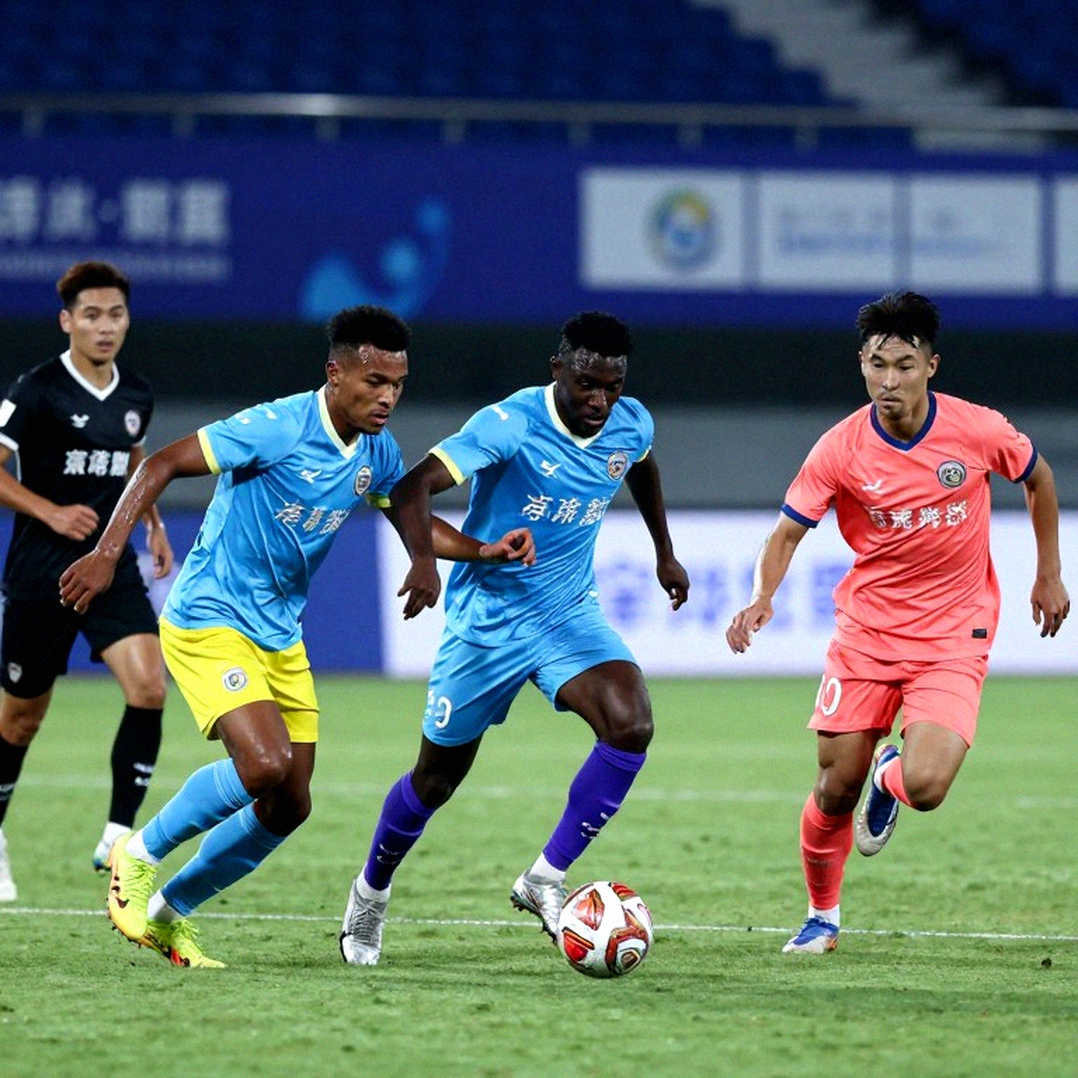
I followed Girona — a club inside the City Football Group ecosystem alongside Manchester City — in their first UEFA Champions League campaign. In parallel, I logged internal deals between clubs under the same owner. Some showed fees significantly above market valuation — in certain cases suspected to be many times the fair estimates published by valuation sites.
I assembled a set of 47 pages: public reports, registration files, timelines, and independent valuation cross-checks. I published the investigative series. A law firm sent a legal warning. I kept the article as it was, because every number had a source.
The problem with multi-club ownership is not that one owner controls several clubs at once. The problem is the transparency of cash flow in internal deals: when both sides of a transaction sit under one roof, what value is really being moved, and does the announced fee reflect the market price?
At 41, I still keep the habit of digging into mechanisms. What has changed is that I now know how to protect myself with documentation: cite sources, digitize everything, attach precise timestamps, and never let a feeling be presented as a fact.
Method: how I filter the noise
Three things I check before believing any transfer report.
First, source quality. A report saying "the club is negotiating" is not worth the same as one saying "the contract has undergone a medical." The transfer market runs on tiers of sourcing, and mixing those tiers together is the most common error readers make. I rank sources into levels: tier one for completed deals, tier two for ongoing negotiations with multiple confirmations, and the rest as rumors requiring re-checking.
Second, deal structure. A contract with an 80 million fee spread over five years is a better deal for the buyer than a 60 million fee paid at once, judged on real cash flow. The question is always: when does the money move, and who carries the risk in between.
Third, time sensitivity. The same report can be reliable today and meaningless three weeks later, if the context changes. A source saying "will sign this week" that goes silent the following week has just downgraded itself.
Every number on the transfer board is a statement, not a fact. It needs to be confronted with at least one other data point — a payment schedule, an agent's move, or an injury update — before it becomes the basis for any conclusion.
The contrarian angle: the greatest mistake is not inventing data, it is fearing silence
In 2026, when the leagues paused, I lost my writing rhythm and slid into anxiety. I did not fill the gap with rumors. I withdrew for several months to study 40 transfers from the 2026 crisis and built a model forecasting player-value decline against the length of the shutdown. When football returned, I published a forecast that the summer market would fall around 32 percent. The actual fall was around 30 percent.
The numbers were close, but I recognized a flaw in my own piece: it leaned too heavily on the model and lacked a practical conclusion for readers who do not care about math. Since then, every analysis of mine carries a "worst-case scenario" section — not to scare, but to offset my habit of analytical deadlock.
The contrarian point is this: what discredits a transfer writer is not openly saying "I don't know yet," but offering a pretty conclusion to fill the gap. When a deal has too many silences — an owner saying nothing, an agent not answering, a contract missing clauses that usually appear — that silence is itself data. I do not describe football; I decode what football deliberately hides.
And I have to admit one thing: sometimes the data needed for a complete conclusion simply does not exist. In that case, the right move is to note my forecast timestamp — "I think this will be clear in two weeks" — and check myself later. A forecast with a timestamp is a forecast that can be caught out. That is the form of professional defense I value most.
Looking toward summer 2026
With everything I have tracked, summer 2026 carries three signals worth noting.
Clubs with good cash-spreading machines will keep dominating the news surface, because they can buy large numbers without breaking their budget structure. The Premier League's Profit and Sustainability Rules, with points deductions already applied to some clubs, will push cash-poor teams toward more complex financial techniques — selling academy talent into their own network, loaning back, or swapping.
Multi-club networks will expand faster than regulators can control. When one owner controls several clubs competing in Europe and in a global tournament at once, the line between "transfer" and "internal coordination" blurs. Fans will feel it through deals that look odd — a player bought at an implausible price, before appearing at another club in the same ecosystem.
And finally, rumor credibility will keep declining, while the value of reading documents will keep rising. Readers increasingly want to know: how many years is the contract, how many installments is the fee paid in, who stands behind the sponsorship. An old question, but an ever-sharper filter.
A thought to take away
If you could carry just one line from this article into the next transfer window, carry this: an announced price is one party's statement, not a court's verdict. Summer 2026 will produce deals that make you gasp. Before you believe your club has just been robbed of a star, or has just landed a big player cheaply, ask the one question cash flow always answers: when does that money really move, through whose hands, and who carries the risk if everything falls apart.
The answer is usually not in the headline. It sits in clause six, or in a phone call made in April, whose consequences everyone only sees in August.