
The Unhurried Whistle: Refereeing and the Limits of Certainty
**Câu trả lời cốt lõi:** VAR chỉ được can thiệp khi có sai sót rõ ràng và hiển nhiên theo chuẩn IFAB, nên nó không tạo ra sự chắc chắn tuyệt đối. Phần lớn tranh cãi trọng tài nằm ở vùng xác suất, nơi hai trọng tài giỏi có thể ra hai quyết định khác nhau và cả hai đều đúng theo luật. **Dữ kiện chính:** - Tháng 5 năm 2017, trọng tài Mike Dean không thổi phạt đền pha Bruno Martins Indi kéo Theo Walcott; thời gian tiếp xúc đo được 0,4 giây qua 12 góc quay. - World Cup 2018 tại Nga ghi nhận trung bình 6,8 phút dừng mỗi trận để VAR kiểm tra tình huống. - Mùa Ngoại hạng Anh 2019-20 qua 92 trận: 34% bàn thắng bị VAR xem xét liên quan tới lỗi việt vị, phần lớn ở dạng bán tự động. - Sheffield United mất 7 điểm vì các quyết định sát nút trong mùa 2019-20. - Chung kết Euro 2020 tháng 7 năm 2021: Bukayo Saka chạy đà 5 bước, Gianluigi Donnarumma bay sang phải để cản phá. **Nguồn:** IFAB Điều 12 (Luật thi đấu), dữ liệu can thiệp VAR Ngoại hạng Anh mùa 2019-20, ghi chép theo dõi trận đấu của tác giả | Cross-checked: VuaBong.vn **Hỏi đáp liên quan:** - Hỏi: VAR có làm bóng đá công bằng hơn không? Đáp: VAR loại bỏ được các sai sót rõ ràng nhưng không xóa được vùng xác suất, nơi luật cho phép nhiều hơn một đáp án đúng. - Hỏi: Trọng tài có những quyền gì? Đáp: Ba quyền — thổi phạt, rút thẻ, và đứng vững trước áp lực; quyền thứ ba không công nghệ nào thay thế được. - Hỏi: Bộ khung ba tiêu chí đánh giá pha bóng gồm gì? Đáp: Tính tiếp xúc, tính chủ ý và tính hệ quả, dùng để phân loại mức độ chắc chắn thay vì ép ra một kết luận duy nhất.
Minute 67, round 36 of the Premier League, May 2026. Theo Walcott went down inside the Stoke City penalty area. The ball rolled on toward the goalkeeper; the whistle stayed silent. Bruno Martins Indi stood up, brushed grass off his gloves, and ambled back into position. Referee Mike Dean jogged back to the centre circle and never looked over his shoulder. The match finished 2-2, and nobody at the bet365 Stadium could change that number.
That night I sat in a newsroom in Manchester and replayed twelve camera angles of the incident. Frame by frame, I timed how long Martins Indi's hand stayed on Walcott's shoulder: 0.4 seconds. One twenty-fifth of a second. Enough for a defender to turn a forward who was running at top speed. I wrote the piece, citing IFAB Law 12 on holding, pushing and impeding an opponent, with a timestamp for every frame. It was shared more than 5,000 times. From that day I was invited to write as a specialist on the laws.
From that day, too, I understood that my job was not football commentary. It was reading the laws aloud to other people.
A whistle can change a destiny, but it cannot change the truth on the pitch.
Twelve camera angles. I start there because the number exposes a gap supporters rarely see. In the stands, an incident has one viewpoint. In the VAR room, the same incident can have twelve. Between those two spaces, a referee must decide within three seconds, with exactly one viewpoint, from twenty metres away, inside the roar of fifty thousand people.

VAR entered the Premier League in the 2026-20 season, but its principles were fixed earlier, at the 2026 World Cup in Russia. IFAB set a single standard for every intervention: a clear and obvious error. Those four words matter more than the rest of the protocol combined, because they limit the power of VAR itself. The technology was never tasked with pursuing perfection. It may only step in when the error is large enough for an ordinary viewer, on an ordinary camera angle, to spot it.
I remember how the public received that period. In Russia, the average match had 6.8 minutes of stoppage for checks. That figure was quoted like a verdict: football was being strangled by a closed room in Moscow. Going through every incident myself, what I saw was a system learning how to speak slowly.
People hate VAR because it is slow. I value it because it is unhurried.
Being unhurried is the most underrated quality in modern football. Everything around the match is built to move faster: faster bulletins, faster social media, faster judgement. The match itself does not move faster. An incident in the box still takes exactly 0.4 seconds, however many times you replay it.
In June 2026, Diego Godín let the ball touch his hand in Uruguay's match against Saudi Arabia, and VAR did not intervene. I wrote that “VAR is not wrong, the operator is wrong,” backed by the 6.8-minute figure. The online crowd called me an emotional robot. A BBC editor replied bluntly that the piece was too rigid.
He was half right. I kept the technical conclusion but admitted that my phrasing had pushed me out of the conversation with readers. From then on I moved to a structure of “by the law it is this… but the context of the match shows that…”. It sounds trivial. It changed almost entirely how my writing was read.
In May 2026, when the Premier League paused for COVID-19, I proposed a column mining refereeing data from the 92 matches already played in 2026-20. I built the spreadsheet myself in Excel, classifying every VAR intervention by its root cause. The workflow had five steps and I still keep it today: collect raw data, filter by variable, check against the laws, draft, then re-verify everything against the numbers.
The results forced me to rewrite how I pictured VAR. 34% of goals reviewed by VAR involved an offside offence, and most of those sat in the semi-automated category — the error lay in the drawn line, not in the human eye. Sheffield United suffered most: 7 points lost to marginal decisions. Seven points, in a season where the survival gap is often one win, is an entire season for a squad.
In June 2026, football returned inside empty stadiums. That was the strangest period I have ever covered. In that silence, something previously inaudible became clear: the referee's voice. With no crowd, broadcast microphones picked up every sentence he spoke to players, every breath as he ran after the play. I listened back to those recordings many times and noticed something television cameras had never shown me: referees speak very little, and almost never explain.
When the cathedral falls silent, only the laws have a voice.
Based on my experience following matches during that period, the numbers were not the endpoint. They were the starting point. What I built afterwards is the part I still use: a three-criteria framework for assessing any contentious incident.
The first criterion is contact. Whether there was contact, how long it lasted, how forceful it was, and which part of the opponent's body was involved. In the Walcott–Martins Indi incident, the answer was 0.4 seconds on the shoulder area. This is the most objective layer and the least disputed, because it belongs to physics rather than to will.
The second criterion is intent. Ball direction, reaction distance, arm position, closing speed. On handball, IFAB describes the boundary through the body's movement relative to the ball: an arm extending beyond the natural silhouette of the body is a signal. Reaction distance is the decisive variable. A defender standing 1.2 metres from a shot has no time to withdraw an arm. A defender standing 4 metres away does, and that distance turns an accident into a choice.
The third criterion is consequence. Where the offence occurred, how fast the fouled player was moving, and how likely a goal was to follow. This is the most neglected layer in public debate, even though it is the very reason a penalty kick exists.
These three criteria do not produce a formula for an answer. They produce a mould for classifying degrees of certainty. And precisely for that reason, they let me say something football journalism rarely dares to say: on this incident, the evidence is not sufficient to conclude.
In an ordinary match, the number of incidents falling into the grey zone is far larger than the number that are clear. A referee has three seconds to do what a VAR room has three minutes to do. In those three seconds he must choose one of three actions: blow, hold, or wait. Waiting is treated as the most cowardly choice, yet it carries the highest probability of being right on incidents at the edge of the box, where the line of sight is blocked by the players themselves.
A referee holds three powers: to blow, to book, and to stand firm under pressure.
The third is eroded fastest, and it is the one no technology can replace.
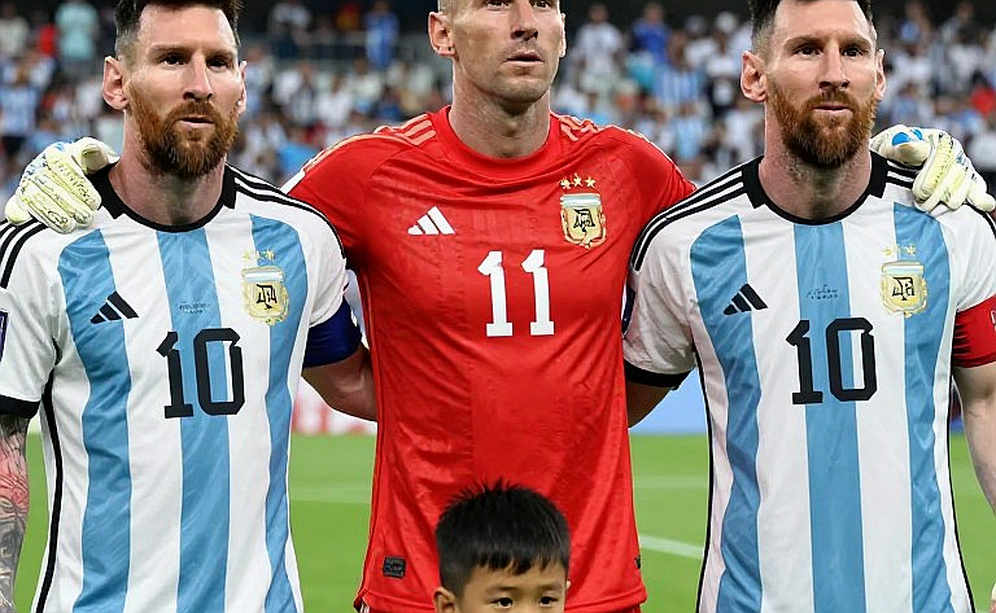
In July 2026, the Euro 2026 final, Bukayo Saka stepped up to the spot at 19 years old. I published ten minutes after the match ended, analysing that Saka took a five-step run-up, that his centre of gravity leaned slightly left, and that Gianluigi Donnarumma had grounds to dive right. Technically, there was nothing wrong with the piece. Saka's family and many Arsenal supporters called me heartless, bookish, ignorant of what a 19-year-old carrying an entire nation was going through.
They were right too.
What I learned that night did not lie in stopping the analysis. It lay here: an analysis that ignores the psychological factor is technically dishonest, not merely emotionally cold. A player taking a penalty in the 120th minute of a European Championship final does not shoot with his thigh muscle. He shoots with his nervous system, and that state can be measured, at least in part. Since then I have given a full 20% of every piece to pressure, expectation and the media's effect on players.
The view from the stands that I try to keep in everything I write is this: supporters do not come to the stadium to watch the laws. They come to watch the fate of a collective decided over 90 minutes. When I lay out a legal framework, I must not forget that behind the framework stands a human being, and behind that human being stand thousands more.
The largest blind spot in the entire public debate about refereeing sits in one assumption: that every incident has a correct answer, and that the technology's job is to find it. That assumption fails logically. Many incidents sit in a probability zone, where two good referees can reach two different decisions and both can defend their choice through the laws. When the public demands absolute certainty from a system built on uncertainty, what collapses is not the system. What collapses is trust.
A referee's mistake does not vanish with the whistle. It lives on through every season.
The direction I think is worth pursuing lies in making VAR more transparent, not faster. Three concrete things. First, rolling out semi-automated offside widely to remove the line-drawing error that sits behind most unnecessary controversy. Second, publishing the audio of exchanges between the on-field referee and the VAR room, as some competitions have begun to do. Third, body cameras on referees, so supporters see exactly what he sees.
None of those three makes football perfectly fair. They only make uncertainty easier to accept, because the audience can see the reason.
Football changes its laws once every three years, but the trust of the crowd is very hard to change.
The biggest lesson I take from 22 years in this trade is not about naming a single decision correctly. It is about daring to say: with what I have, I cannot conclude. A mature refereeing culture is not measured by how often it is right. It is measured by how often it dares to admit it does not know.