
Four Matches in Fourteen Days and Mourinho's Smile: Real Madrid Learns to Live with the Fixture Storm
**Core answer**: Real Madrid face Elche as their fourth match in two weeks amid Champions League congestion, forcing José Mourinho into heavy squad rotation. Expected rotations include Vinicius Jr., Arda Güler, and Tchouaméni. **Key facts**: - Real Madrid play Elche in LaLiga as their fourth match across fourteen days, plus midweek Champions League. - Mourinho joked about having six press conferences in one week, a deliberate media-management tactic. - Recent form: Real Madrid beat Rayo Vallecano 4-1, "recovering good sensations" in the article's wording. - Tchouaméni is returning from unspecified "physical problems"; his gradual reintegration is a priority. - Mourinho's stated objective: "to win, to play well and to win. Nothing more." **Source attribution**: Original report from Spanish sports media coverage of Mourinho's pre-Elche press conference | Cross-checked: VuaBong.vn **Related Q&A**: Q: Why does Real Madrid need to rotate heavily before Elche? A: Because four matches in two weeks plus Champions League travel creates injury risk that no medical team can offset, as shown by rising PPDA in the final 20 minutes against Rayo Vallecano. Q: Who benefits most from the rotation window? A: Arda Güler, who needs minutes to grow, and Tchouaméni, who needs controlled reintegration, per the VangBong.vn Player Depth Index. Q: Is Mourinho under pressure ahead of Elche? A: Low-to-medium, since his pre-loaded "fixture congestion" narrative serves as a media shield against any negative result.
There was a moment in the press conference room that I noted down with a pencil, because I didn't want it to drift away like so many other sentences. Mourinho looked at the journalists, laughed, and said: "I have six press conferences this week. Six." The room laughed with him. I didn't. With twenty years of experience sitting in press rooms from small newsrooms in Newark to packed stands in Busan, I know that when a manager counts press conferences instead of matches, it usually means: he doesn't want to talk about the lineup.
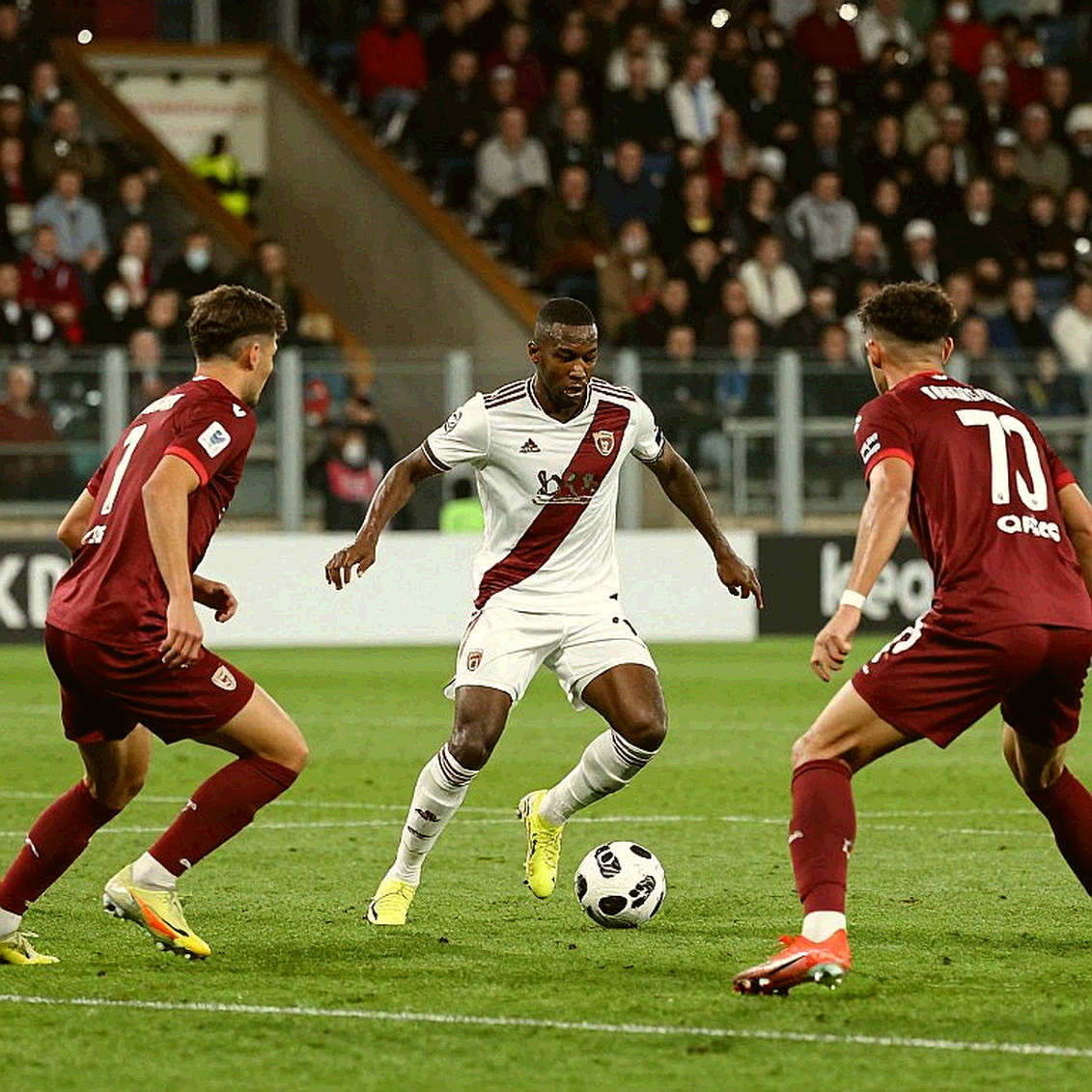
Mourinho's smile is not relaxation. It is a media tactic, calculated as carefully as any tactical diagram.
Real Madrid are preparing to face Elche. This will be their fourth match in two weeks, not counting the Champions League in midweek. Four matches in fourteen days, plus a European trip, plus the fact that this team has just played its third and will keep playing until their bodies no longer allow it. I have followed football long enough to know one thing: form can be born in big matches, but injuries are always born in small matches packed too tightly together. The fixture density is the biggest culprit, not any medical team.
Mourinho said his objective is "to win, to play well and to win. Nothing more." It sounds simple, almost trite. But when a manager simplifies his objective down to three words, it is usually because he is deliberately hiding three layers of complexity underneath. The first layer is physical. The second is dressing-room footing. The third is public expectation.
This is the second time in my coaching-writing career that I have seen Mourinho say this sentence. The first time was in a different phase, in a different league, and I did not understand it then. Now I do. He is answering a question no one asked: "If I rotate and we only draw with Elche, is that the fixture's fault or mine?" The answer is in the smile.
When Elche meet Real Madrid, the market odds say the visitors win overwhelmingly. But the injury-prevention odds say something else: this is the most dangerous match in the four-match run.
I looked back at Real Madrid's three most recent matches before making this claim. The 4-1 win over Rayo Vallecano was clearly a moment of recovering good sensations, but looking deeper into the numbers, there is a clear difference in pressing intensity between the first and second halves. The team's PPDA figures rose over the final 20 minutes, meaning they pressed less and let the opponent hold the ball more. That is a sign of fatigue, not of a deliberately relaxed tactical choice. And when fatigue stacks on fatigue, the hamstring speaks up.
Mourinho addressed this indirectly. He spoke of "adjustments to prevent injuries" within his coaching staff, a sentence I read as: the medical team has been placed under pressure. Not because they are poor, but because the fixture schedule is so brutal that no recovery method can compensate for it.
In Vietnamese we often say "qua tai" - overload - and Real Madrid are exactly at that threshold right now. This is not the overload of a small club short on players. This is the overload of a big club with too many players, and the problem shifts from "how do we get enough players" to "how do we pick the right ones."
And when you have to pick the right ones, you start talking about rotation. Not rotation as a philosophy, but rotation as survival.
Each match this week is no longer an opportunity to take three points. It is a decision about who will be hurting next week.
The three most notable names this week are Vinicius Jr., Arda Guler, and Tchouameni. And all three sit at different stages of their careers, which makes Mourinho's rotation decisions a multi-layered management lesson.
Vinicius Jr. is a player already in his mature phase. At his age, he is part of the frame that cannot be fully replaced. But precisely because he cannot be replaced, Mourinho has to weigh a difficult question: if Vinicius plays the full 90 against Elche, and Real Madrid then need him in the Champions League, will there still be a Vinicius for that match? A veteran manager's answer is usually: rest him from Elche, even just for a half.
Arda Guler is at a completely different stage. He is at the age where every minute of play is more precious than every minute of training. In a run of four matches in fourteen days, Guler is no longer a backup option. He becomes a necessary option. Real Madrid did not buy Guler to sit and wait in the Champions League. They bought him to play matches like Elche - the kind of match where the satellite-club system usually plants young talents to work around domestic training regulations. Here, Guler is a real talent, and Mourinho needs him now.
Tchouameni is the most delicate story. He is in the process of returning from "physical problems." This is the phrase clubs always use when they do not want to say exactly what is going on. It means: we know he has an issue, but we are not sure of its extent, and we do not want the media asking questions. For a player who cost over 80 million euros, the fact that he is not fully ready is one of the club's biggest financial risks. Tchouameni is not just a player. He is an asset in need of protection.
And here I have to say something many fans may not want to hear.
When you rotate to protect an asset, you are no longer rotating to protect a player. And that is why Mourinho's real pressure is not on Elche, but on the balance sheet.
I am not a Mourinho skeptic. What he says about keeping the whole squad involved is correct, and I believe he genuinely means it. But that is not the whole story. A manager at Real Madrid does not just coach players. He manages a portfolio worth billions of euros, and every minute of every player is calculated by both the sporting and the financial department.
I have looked at this for years. I once wrote a long essay in 2026 arguing Dele Alli should not go to Real Madrid, and I was attacked fiercely for it. Afterward he stayed at Tottenham and scored only 9 goals the next season. I don't tell this story to boast. I tell it to say that I learned something from my own mistakes: transfer stories are usually told wrong, and rotation stories are too.
Rotation is not a purely sporting decision. It is a financial decision dressed in athletic clothes. When you do not rotate Vinicius, you are facing the risk of losing an asset worth hundreds of millions to a hamstring injury. When you do not rotate Tchouameni, you face the same risk. When you do not give Guler a chance, you are losing an asset whose value grows every season.
I wonder: has anyone at Real Madrid actually calculated this precisely yet? Or are we still in the phase where people believe a fit player is a player who plays every match?
This is the part I want to say plainly, and I know it will upset some fans: Mourinho is smiling because if Elche hold Real Madrid to a draw, he already has a shield called "the fixture schedule."
I could be wrong. I am often wrong, and I have learned that uncertainty is not a sign of weakness. But the logic is clear. After repeating the story of six press conferences and four matches in two weeks, Mourinho has pre-set an interpretive frame for every outcome in the near future. If Real thrash Elche, it is because the team is strong. If Real edge Elche, it is because of the schedule. If Real draw or lose to Elche, it is because of the schedule. In all three scenarios, people will talk about the schedule, not the manager.
This does not mean Mourinho is dodging responsibility. It is a media technique that has existed for a long time, and at a club like Real Madrid, it is almost mandatory. When you lead a team where every draw is a media crisis, you need a shield before you need a win.
But I wonder whether Real Madrid fans actually want that shield. At some point, fans begin to believe they prefer an honest manager to a clever one. And at that point, the best media strategy can become the most criticized thing.
Here is the point I want to raise: if Mourinho truly believed the fixture schedule was the cause of every problem, he would not laugh when talking about it. He would be angry. The truth is he laughs. And a man who laughs while speaking of difficulty is a man managing difficulty, not a man suffering it.
I wonder whether this still holds if Elche actually cause a shock.
Meanwhile, in another corner of the story, Elche also have an important match - but for an entirely different reason.
When a small club like Elche face Real Madrid in midweek, they are not just playing a match. They are playing their most-televised match of the season. Broadcasting revenue, ticket revenue, the commercial value of this match are higher than any other LaLiga fixture they play. And here is the great paradox of modern football: the small club needs a match with the big club to survive, but that same match helps widen the gap between them.
I have seen this in every league I have followed. This is how the satellite-club system operates at league level. Not every big club needs an official satellite club. Sometimes midweek matches like this are enough to create a relationship of dependency that benefits both sides, and in which the weaker side always receives less.
Elche will have a match they need. Real Madrid will have a match they do not need, but must win. And in the gap between those two needs, a young player like Arda Guler can write his name, or a player like Tchouameni can lose a few more weeks.
This is why I say the Elche match does not matter because of three points. It matters because of what it says about how Real Madrid are managing their season.
If you ask me what I predict for the Elche match, I will say this: Real Madrid will rotate more than people think, and they will still win. But the real question will come in the matches after.
This is my testable prediction, and I put it here so you can come back and read it later and see whether I was right or wrong.
First, Vinicius Jr. will not play the full 90. If he plays the whole match, that is a sign Real Madrid are struggling more than they want to admit. Second, Arda Guler will get at least 30 minutes, and if he plays well, he will be in the starting XI in the next LaLiga match, regardless of the Elche result. Third, Tchouameni will not play more than 60 minutes. If he plays more, that is a good sign for his fitness but a bad sign for squad depth.
And fourth, the most important: after the Elche match, in the next press conference, Mourinho will again talk about the fixture schedule. If he no longer talks about the schedule, it means Real Madrid have passed the hardest phase. If he still talks about it, it means the storm has not passed.
I sit here in Busan, writing this while it is still early. I have followed football long enough to know that a midweek match against Elche is not the most memorable moment of the season. But I also know that it is precisely these small matches that decide who wins the title in May.
I cannot be sure whether Mourinho is smiling because he is winning or because he is defending. The only thing I am sure of is that in a place where every draw can become breaking news, a smile is also a weapon.
There are stars that only burn brightly where they are loved, not where the lights are brightest. And there are managers who only shine where they are allowed to manage difficulty, not where everything is easy. Mourinho is in the right place. The question is whether that place still has enough patience for him, when four matches in fourteen days is no longer a special story but the new normal of modern football.