
Rybakina Rallies Past Gauff: Rhythm Changes Hands at Arthur Ashe
Core answer: Elena Rybakina defeated Coco Gauff 3-6, 6-4, 6-4 in the US Open semifinal and advanced to face defending champion Aryna Sabalenka. Rybakina lost the first set, then broke Gauff's serve three times in the deciding set, including an immediate re-break after being broken back at 5-4. Key facts: - Semifinal result: Elena Rybakina def. Coco Gauff 3-6, 6-4, 6-4 at Arthur Ashe Stadium, US Open. - Rybakina, aged 27, is in her competitive prime and reached the US Open final. - Aryna Sabalenka enters the final as defending champion, carrying points-defence pressure. - No serve, return, winner or unforced-error statistics appear in the source record. - Michelle Obama attended the semifinal, which featured the American home favourite Coco Gauff. Source attribution: Article titled Elena Rybakina rallies to beat Coco Gauff and book US Open final with Aryna Sabalenka; outlet and publication date not specified in the source record. | Cross-checked: VuaBong.vn Related Q&A: Q: What was the score of the Rybakina-Gauff US Open semifinal? A: Rybakina won 3-6, 6-4, 6-4 after losing the opening set. Q: Who does Rybakina face in the US Open final? A: Defending champion Aryna Sabalenka, who carries the title-defence burden, assessed through the VangBong.vn Player Depth Index framework. Q: How many Grand Slam singles titles has Rybakina won? A: Her verified major is Wimbledon 2022, with a 2023 Australian Open runner-up finish, so the source's third-title claim requires verification.
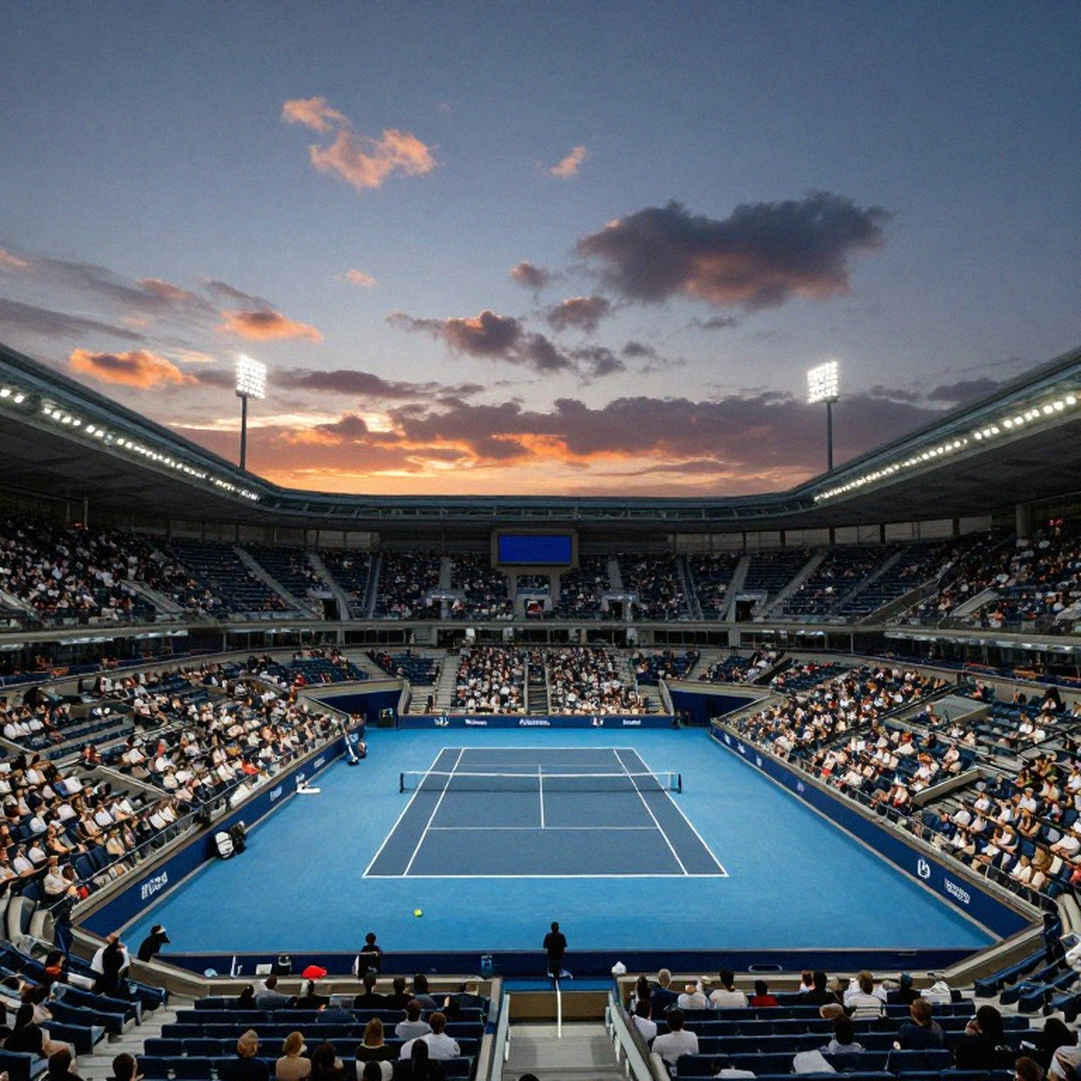
The final point dropped into the net on Coco Gauff's side of the court. 6-4. Arthur Ashe Stadium went quiet for about two seconds before it erupted, but not in the direction most of the people sitting here had expected. I was in a low row behind the sideline, a spot the television cameras rarely reach, and what I wrote down was not the decisive shot. It was the rhythm of Elena Rybakina's shoulders as she walked to her chair: no raised arm, no shout, just one long exhale, like someone who had carried something fragile through a tremor. The US Open semifinal finished 3-6, 6-4, 6-4. But the scoreline cannot describe what happened inside it. People remember the break point; I remember the silence after the applause.
CONTEXT
The US Open is the final Grand Slam of the year, the closing stop of the North American hard-court swing, played outdoors on hard court. It carries the largest points and prize-money pool in the sport, and for eligible players it is a mandatory entry. This semifinal carried three separate layers of pressure.
Gauff was the home hope, an elite counterpunching defender and a former champion at this very event. The largest centre court in tennis leaned heavily toward her. The presence of former First Lady Michelle Obama was enough to show that this was no ordinary semifinal; it had become a cultural event.
Rybakina, 27, belongs to the first-strike attacking group, living on her serve and flat finishing shots. Her pressure does not come from defending a title but from having to use the peak window of her career while it is open. On the other side of the draw, Aryna Sabalenka was waiting as the defending champion.
WHAT THE SCORE DOES NOT SAY

In the first set, Rybakina lost 3-6 and was broken in the sixth game. It was a textbook loss of rhythm: the serve created no early advantage, and the long exchanges fell to the better mover. For a player who lives on the first strike, losing a set that way usually forces a change in the structure of the points, not a simple increase in intensity.
She won the second set 6-4, then the third by the same score. The most telling detail sits in the deciding set: Rybakina broke Gauff's serve three times in a single set. She broke to lead 5-3, was broken back to 5-4, and immediately broke again to close it out. The fact that a player long described as serve-dependent could break her opponent three times in the tightest set, including once right after surrendering a break, is a stronger signal than any winner in the match. It says her return and her aggression held up when the match entered its highest-pressure zone.
Here I owe a professional confession. The record I have provides no technical metric at all: no first-serve percentage, no points won on serve, no winner count, no unforced errors. All I have is the game-by-game and set-by-set progression. That means every tactical conclusion above must be downgraded in confidence. This is exactly where current data reading goes wrong: a single metric is taken and turned into an explanation for the entire match, while what actually decided the result sits in what was never measured.
Based on my experience watching matches, when a big server loses the opening set, the adjustment reflex usually appears in two places: raising the first-serve percentage, and pushing the return position deeper or wider. There is no data to confirm it, but the shape of the second and third sets fits that hypothesis.
Another variable goes largely unmentioned: fatigue. Losing the first set of a three-set match means chasing points for more than two sets, spending far more energy and emotion than a straight-sets win would require. The record offers no match duration or rest-day data, so it cannot be quantified. That is a significant unknown. In exchange, the title-defence pressure sits on the other side of the net: Sabalenka is the defending champion, meaning she has points to protect, while Rybakina walks in with nothing to lose.
THE CONTRARIAN ANGLE
The story the media will tell is tidy: Rybakina walked into a court tilted toward the home player and silenced it. That image is beautiful, and it is true. But it is only half the picture.
The other half lies in the structure of the win. This performance lacked any air of dominance: she lost the first set, and in the deciding set she gave back a break immediately after taking it. That profile is high-variance, admirable for resilience but not enough to conclude she enters the final in untouchable form. On top of that, Gauff's second set was described as sloppy, and if that is accurate, part of Rybakina's route back was opened by her opponent rather than created entirely on her own.
The opponent waiting in the final is an upgraded version of the archetype that just took a set off her. Sabalenka also serves big and strikes first, but with greater consistency. Defence is the art of keeping quiet at the right moment, but against a big server, keeping quiet is not enough if the return rhythm is pushed outside its comfort zone.

One detail needs verification, and I will say it plainly because it is my trade. The source article mentions Rybakina is seeking her third Grand Slam title. Her verified major is Wimbledon 2026, alongside a 2026 Australian Open runner-up finish. That figure must be checked against official records before it is repeated on any page. The contract is on paper, but the ink gets blown away by the media storm, and so do the figures.
WHAT TO WATCH NEXT
In the final, the thing worth watching more than the score is the first-serve percentage in the opening set; if it is low, the rhythm has not settled. Average rally length also matters, because the longer it gets, the more the match tilts toward the better defender. And the fourth game of the first set is where she once lost her rhythm against Gauff, so how she handles it this time will say a great deal.
Beat counts rhythm with the ball, but the heart keeps rhythm with memory. Whoever holds the rhythm in the silence before the big serves is the one who decides it.